Before the surf: Nazaré
The waves crashing into Nazaré today are the same ones that shaped centuries of fishing culture. What’s different is who meets them—and how the world watches.
The Atlantic does not arrive gently in Nazaré. Rising from the deep, it crashes against Portugal’s coast with a force that has made the town world-famous. Today, Nazaré is synonymous with record-breaking waves and big-wave surfing. But long before Garrett McNamara and others brought the world’s media to town, these same waters defined a life shaped by risk, loss, and endurance.

For centuries, Nazaré was a fishing village where men launched small wooden boats directly from the beach, often into unpredictable seas. Many never returned. The ocean fed the town—but it also took husbands, sons, and brothers with relentless regularity.

That loss was made visible on land. Widows traditionally dressed in black, sometimes for the rest of their lives. In Nazaré, mourning was not private; it was communal. A woman in black signaled a life altered by the sea, her clothing a quiet testimony to its cost. These figures became part of the town’s identity, standing in stark contrast to the colorful layered skirts (sete saias) the village is also known for.
Faith and ritual helped the community endure. Fishermen prayed before setting out, families waited anxiously on shore, and the Sanctuary of Our Lady of Nazaré watched over generations who lived at the mercy of the Atlantic.

The waves themselves, of course, have never changed. The Nazaré Canyon—an immense underwater chasm just offshore—has always focused Atlantic swells into towering walls of water. What has changed is how people meet them.
In the 21st century, big-wave surfers arrived, drawn by rumors of something unprecedented. Nazaré became a global stage. Records fell. Crowds gathered. Helicopters hovered where fishing boats once struggled.

For older locals, this transformation carries a quiet tension. What the world celebrates as a spectacle—the battle of human versus ocean—is watched from the Farol da Nazaré, a fort turned lighthouse above Praia do Norte. A place that once offered hope to sailors fighting storms below and bore silent witness to the grief of families whose loved ones never returned.

Yet Nazaré, as it always has, adapted. Fishing continues. Tourism thrives. The widows in black are fewer now, but their memory remains embedded in the town’s collective consciousness.

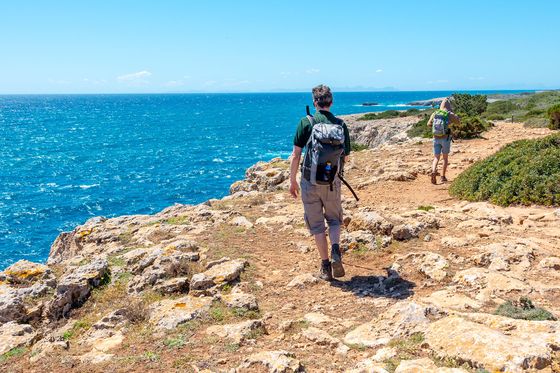
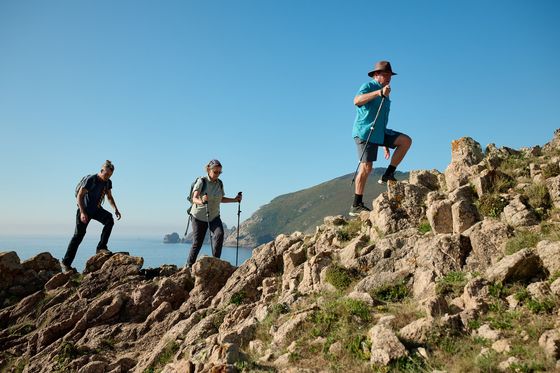
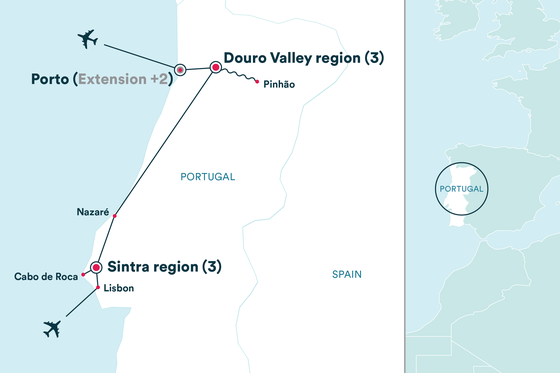
On our Portugal hiking tour to Sintra and the Douro Valley, our coastal walk begins at the world-famous Farol da Nazaré lighthouse. While the calmer seas of warmer months create gentler conditions than the monster waves that draw global attention, this is when you’ll experience Nazaré as locals know it—winding cobbled lanes where fishing nets stretch for mending, and a maritime culture shaped by the ocean’s raw power that carries, with every swell, a history of survival, sacrifice, and resilience.
)
)
)

)
)

)





)





)

)




)