Why Active Travel in Costa Rica Is a Must-Book Bucket-List Experience: A Local Tour Director’s Perspective
Local EF Adventures Tour Director Guillermo Ayub explains why Costa Rica’s volcanoes, rainforests, and coastlines make an unforgettable active trip, and why the people make it even better.
This blog post was sponsored by Costa Rica Tourism.
Ask Guillermo Ayub why travelers should choose Costa Rica and he has plenty of answers. He starts with safety, then moves on to volcanoes, waterfalls, wildlife, seafood, and coffee. But the answer he cares about most is the people.
Guillermo is an EF Adventures Tour Director who was born and raised in San José. He has trained in tropical ecology, holds a Costa Rican tourism accreditation, and has guided for EF since 2006. He even helped design EF Adventures’ initial multi-adventures tour in Costa Rica that explores Arenal and the Guanacaste Coast.
So–who better to ask about a must-book active travel experience than a local expert?

A country that makes you feel safe, and welcome
For Guillermo, a great trip starts with peace of mind. With its neutrality stance globally, he says Costa Rica, which has no military, has long been called the “Switzerland of Central America.”
“As soon as people get off their plane and walk out of the airport; they feel that safe,” he says.
The welcome is just as warm. “Costa Ricans are people who love to make friends with anyone and everyone, especially travelers visiting our country,” he says. “If you sit down on your plane seat next to a Costa Rican, you’ll be talking for five hours for sure!”

A landscape built for adventure
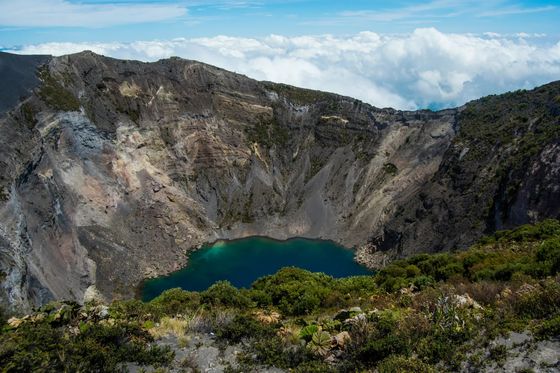
Costa Rica, by land mass, is just slightly smaller than West Virginia, yet it packs in volcanoes, rainforest, lakes, rivers, and a Caribbean and Pacific coastline. Guillermo’s home city of San José sits at about 4,000 feet, in a valley ringed by mountains, with several of the country’s active volcanoes nearby. From there, both coastlines are each about three hours away.
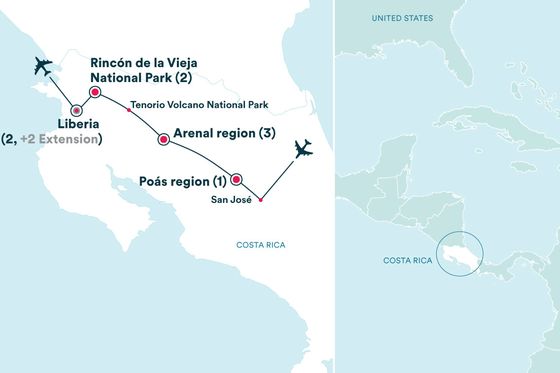
This nine-day tour moves through rainforests to volcano valleys to seacoasts at an active pace. You start in the coffee country of the Poás region, then head for Arenal, with the classic cone-shaped volcano, the country’s largest lake and the rainforest around them. From there you continue to the turquoise rivers of Tenorio Volcano National Park and the wilder terrain of Rincón de la Vieja, then finish on the sunny Papagayo coast.
“You don’t just go, ‘I already went to a volcano, I don’t need another,’” Guillermo says. “Every volcano we visit is so different.”

Ecology: Costa Rica’s extraordinary biodiversity
Guillermo’s career began with an ecology degree. He says that after four years in Colorado, he came home and realized how much of his own landscapes, ecology, and wildlife he had overlooked.
A national park of more than 90,000 acres of pristine rainforest was just 15 minutes from his house. He went on to study tropical ecology at the University of Costa Rica.
The numbers still amaze him. More than 930 bird species have been recorded in Costa Rica, more than in the United States and Canada combined. Birding remains one of his great passions, and he loves to talk about all the different species he has seen over the years in his home country.
The rainforest hikes are the best way to see the Costa Rican landscape and meet locals along the way.
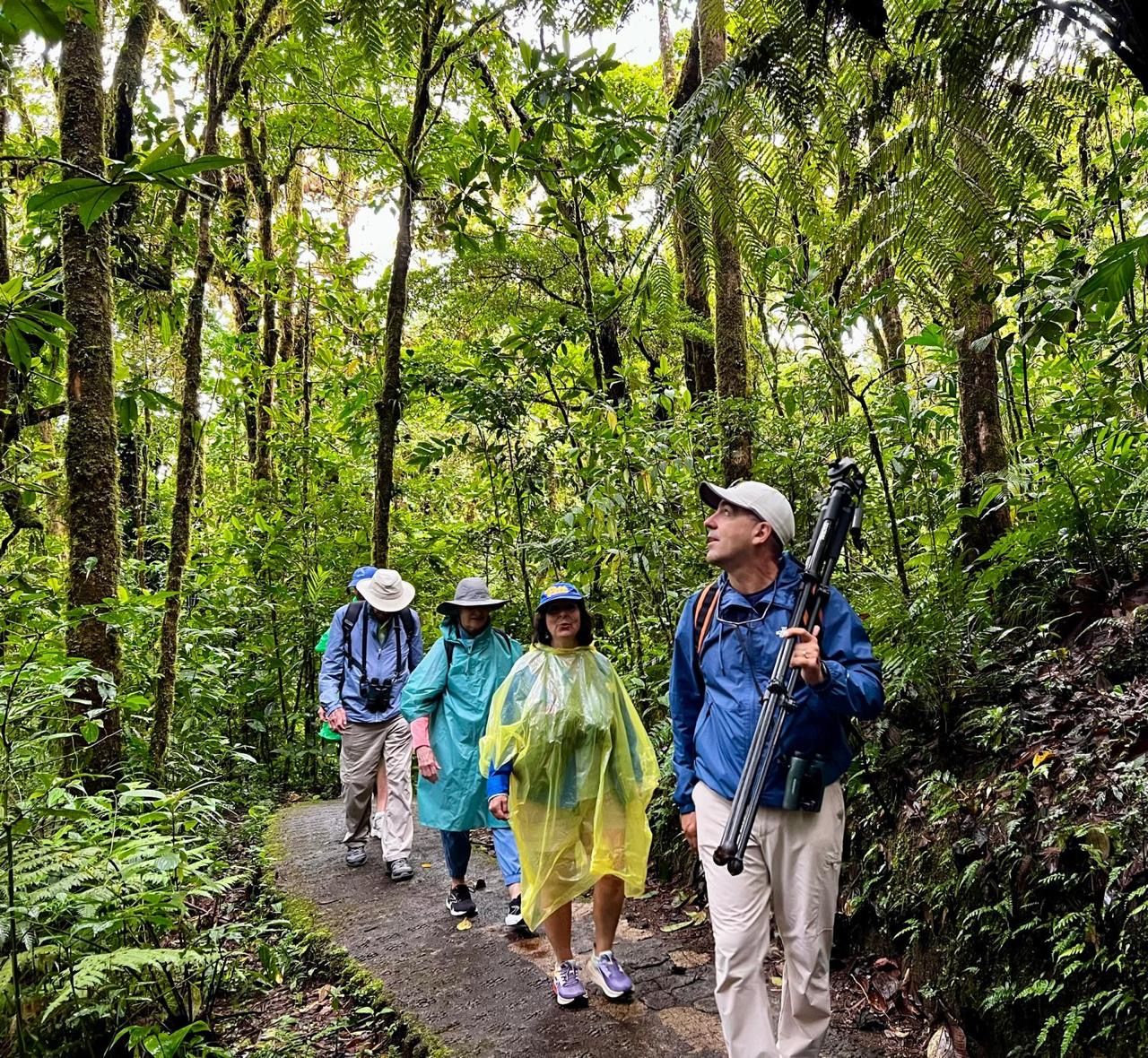
In Rincón de la Vieja National Park, you walk from tropical dry forest into rainforest and may encounter bubbling mud pits along the trail, troops of spider, howler, and white-faced monkeys, toucans, and macaws. You can cool off in a waterfall. The longer hike reaches the 131-foot Cangreja Waterfall. Guillermo describes the view from the summit: you can look down toward the coast while a steaming volcanic crater rises behind you.
At Tenorio Volcano National Park, you hike alongside the Rio Celeste, a mineral-rich river that turns a striking blue where two volcanic streams converge. Then you descend 253 steps to a waterfall viewpoint.

Active travel that fills your heart
With this itinerary, you spend far more time outside than on a bus. Guillermo says that was the point when the tour was designed. “We want travelers visiting us to be outside and be active the most. Seeing this country by trail, zipline, by bike or on the water – it is the best way to experience the landscape.”
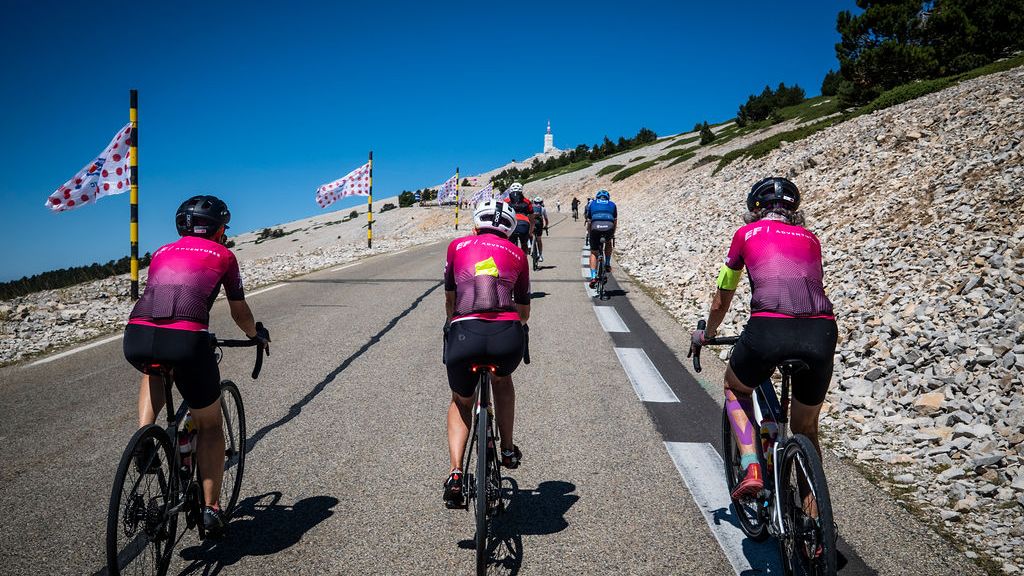
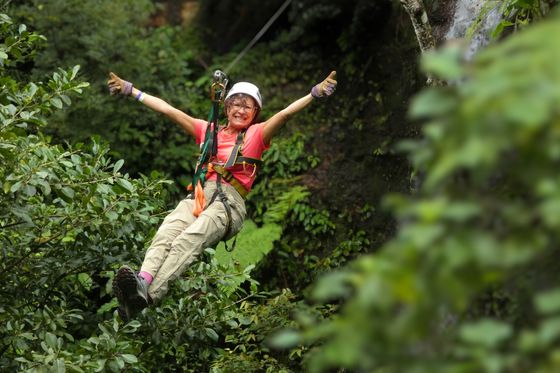
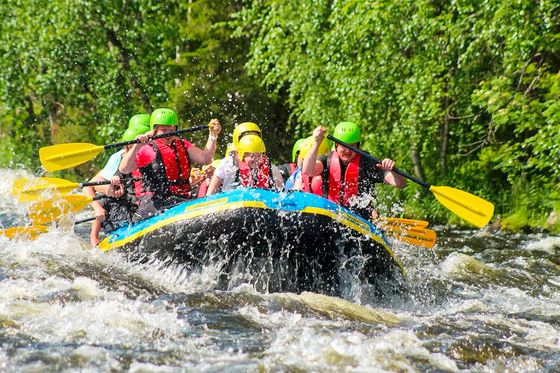
On the Arenal days, you’ll zipline across 12 cables above the rainforest canopy, with the volcano, Cerro Chato and La Fortuna Waterfall as your backdrop. You’ll mountain bike nearly 15 miles around Lake Arenal, then paddle a kayak or stand-up paddleboard across its calm surface. Whitewater rafting on the Rio La Balsa brings 25 Class II and III rapids, and river tubing on the Rio Negro adds more. At Rincón de la Vieja, an optional zipline takes you into a river canyon, a very different experience from the Arenal lines.
Once on the Pacific, a catamaran cruise sails along the Papagayo coast. You can watch for dolphins and sea turtles, and depending on the season, even humpback whales. Then you can snorkel in clear Pacific water. Guillermo notes the boats are small, and the crew prepares lunch onboard.
An education on the trail
Guillermo says working with an education company like EF Adventures shapes how he guides.
“Anyone can take the same photo everyone else takes,” he says.
On an EF trip, a ten-kilometer hike becomes more than a hike.
“It’s more of an educational experience during our walks.” Along the trail, he stops to explain what plants, animals, birds you see; microclimates you experience; and volcanoes that each tell their own story.
“My goal? I want guests to go home having learned something about the country.”
Coffee, seafood and Costa Rican flavors
On tour, visit and overnight on a working coffee farm in the mountains near Poás, where beans grow at 5,000 feet or higher. You’ll learn how they go from plant to cup and join a guided tasting.
Guillermo proudly points out that Costa Rican coffee is ranked among the best in the world. Most industry experts agree.
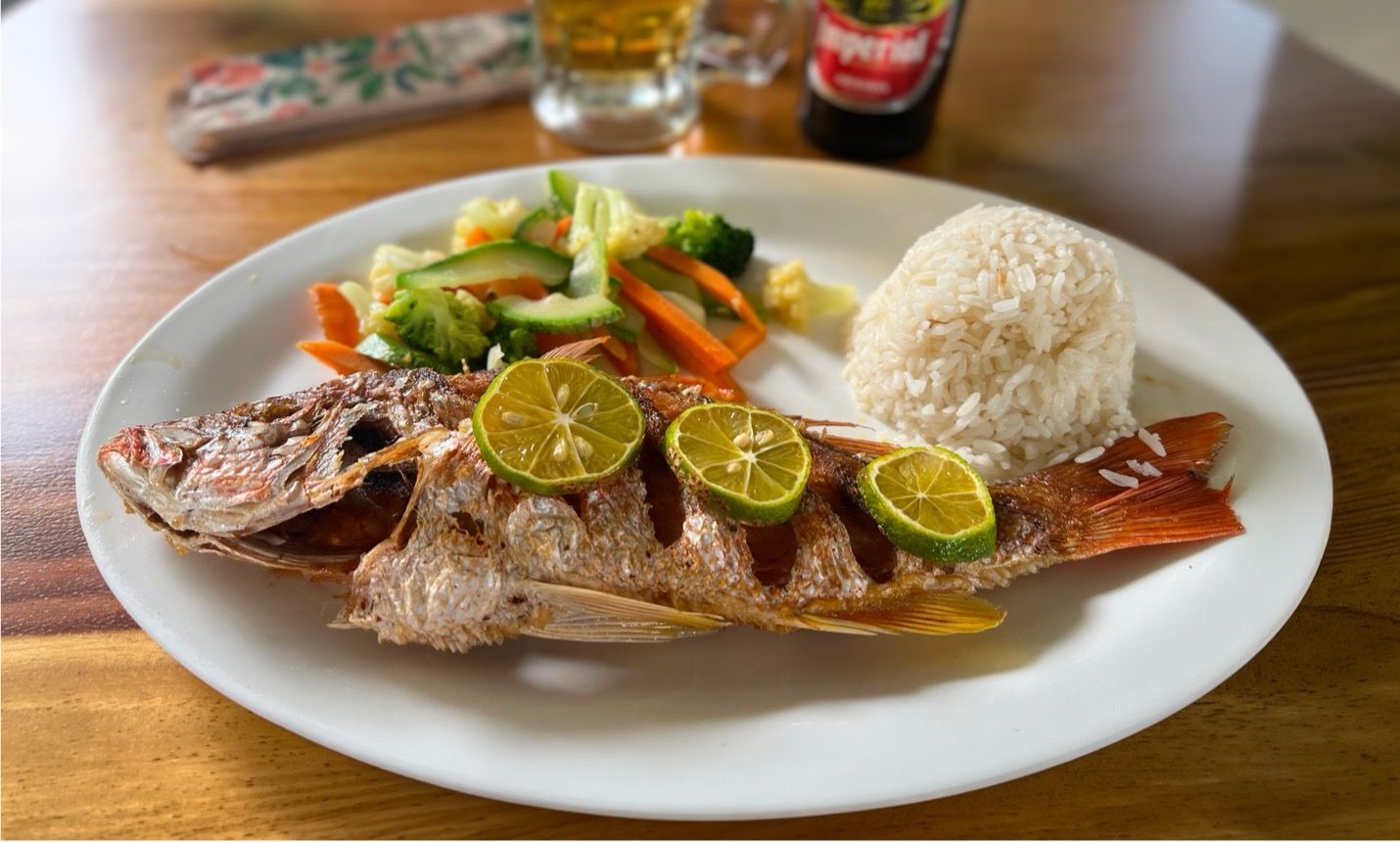
Beyond coffee, you can eat across the country’s regions, from rice, beans, and traditional home cooking to coconut-spiced Caribbean flavors. On this trip, you’ll enjoy farm-to-table dinners and traditional lunches. The seafood is the standout.
“If you’re a seafood person, you’re in heaven when you’re here,” says Guillermo, who gets hungry thinking about whole fried red snapper stuffed with jumbo shrimp.

Culture and tradition you can touch
In the Arenal region, you’ll meet members of the Maleku community, hear about their traditions and heritage, and shop for handmade goods. For travelers who want more time with Guanacaste’s history, the optional Liberia extension visits the artisan village of Guaitil, where you can try your hand at pottery in a traditional workshop. It also visits Santa Cruz and the Nicoya Peninsula, one of the world’s five “Blue Zones.”
Guillermo’s favorite cultural moments aren’t on any itinerary. When he sees a Costa Rican family doing something that is part of local culture, he pulls the van over.
“Without hesitating, I’ll take travelers to local people’s houses, gardens and to other local events, because they’re going to be welcomed so amazingly.”

More than a slogan: the real pura vida
Visitors will see “Pura Vida” on T-shirts, hats and souvenirs across the country. For Guillermo, it’s far more than a slogan. It’s a phrase Costa Ricans adopted over the years to tell the world that life is good here.
“Life is good here. Life is awesome here,” he says. “The people of Costa Rica are so friendly, so warm, and so welcoming. It’s amazing how they make you feel like you’re home. You’re not just a tourist, you’re not just a visitor, you’re part of the family.”
See the country through the eyes of a Costa Rican
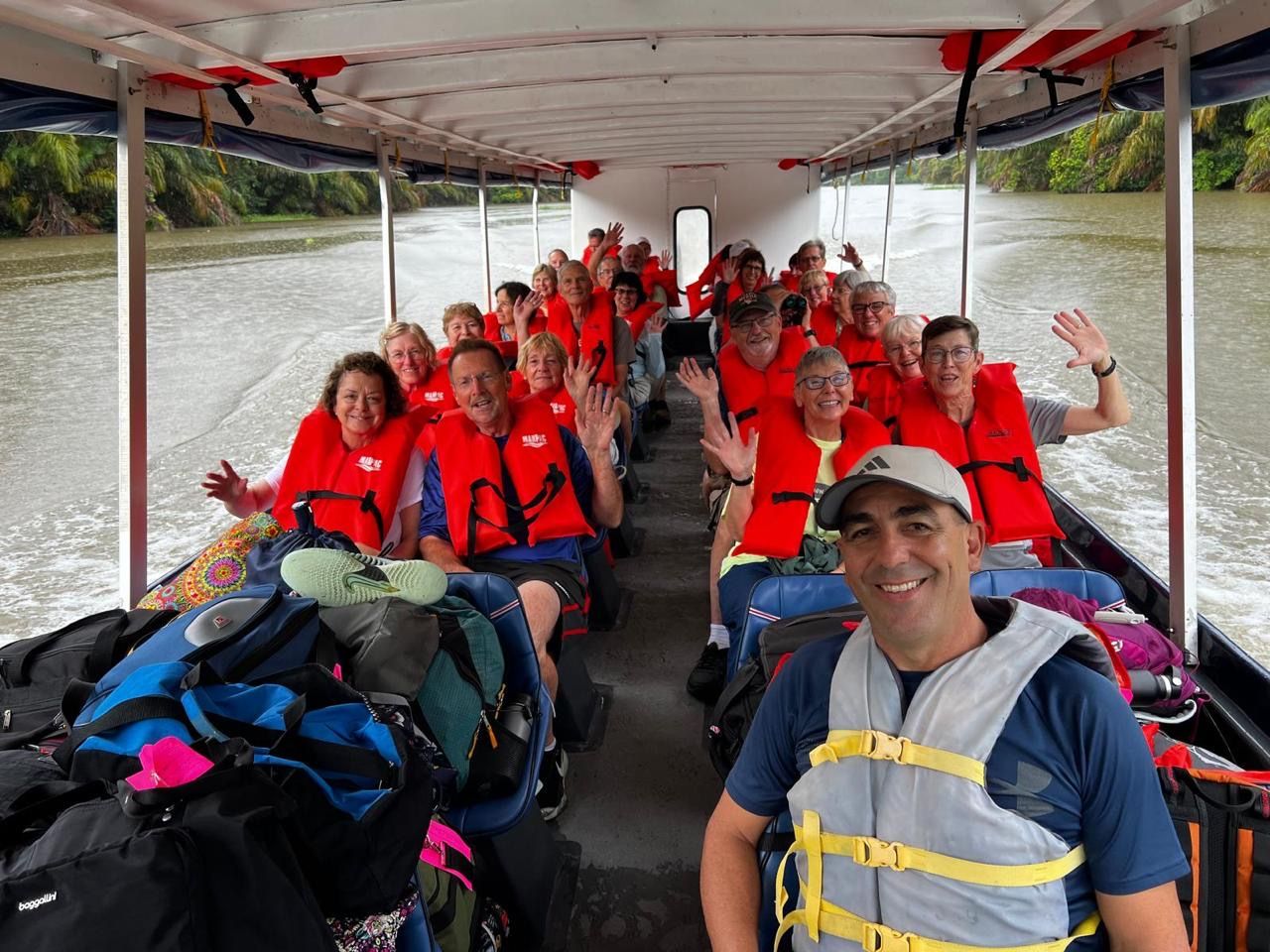
Guillermo Ayub is why going on a guided adventure trip matters. He is what a local Tour Director brings to the experience of travel, knowing which roads lead to the best views, which families will welcome a group, and which moments are worth the detour.
“If you come down here,” he says, “you will see the country through the eyes of a Costa Rican.”
The Costa Rica Multi-Adventure: Arenal & Guanacaste Coast tour runs nine days, or 11 with the Liberia extension, with groups of 6 to 20 travelers. It includes eight nights in handpicked hotels, a private bus, most meals, and all the adventures above.
Ready to go?
Find dates and itineraries at efadventures.com and see why Costa Rica belongs on your bucket list.