

Japan Multi-Adventure: The Japanese Alps & Shikoku
12 days | 14 days with Kyoto extension |
- Group size
- 6–20 travelers
Adventure meets ancient tradition in the Land of the Rising Sun
Japan is a country defined by perfect contrasts—where ancient traditions coexist with cutting-edge innovation, and spiritual tranquility balances epic adventure. Hike Tokyo’s sacred Mount Takao rising just beyond the urban sprawl, then rocket via bullet train to the Japanese Alps. Stand-up paddleboard or kayak on crystal-clear Lake Nojiri and wander through Kamikochi's serene highland valley before experiencing Osaka’s electric energy and famous street food scene. Then, cross to Shikoku island to raft through dramatic Oboke Gorge and climb 1,368 stone steps to sacred Konpira Shrine. Finally, soak in the 3,000-year-old Dogo Onsen hot spring and e-bike the famous Shimanami Kaido across island-dotted seas. From mountain wilderness to modern cities, from whitewater adventures to peaceful hot springs, every moment reveals Japan’s mastery of harmony between opposites.
What's included
- Hiking, stand-up paddleboarding/kayaking, whitewater rafting, yoga & e-biking
- 10 nights in handpicked hotels
- Private bus for local transfers
- 2 bullet train rides & 1 high-speed train ride
- 10 breakfasts
- 1 lunch
- 6 dinners with beer or wine
- Street food tasting & fresh citrus juice tasting
- An expert Japanese Tour Director
- Local guides for all adventure activities and select experiences
- Safety equipment and briefings for all activities
Why you'll love it
- Stand-up paddleboard or kayak across Lake Nojiri’s mirror-like waters
- Conquer 1,368 ancient stone steps to reach sacred Konpira Shrine
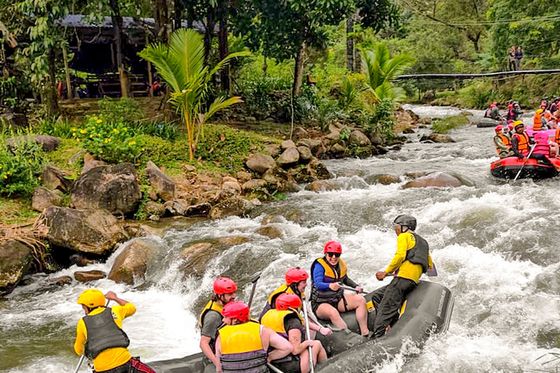
- Raft through Class II & III whitewater rapids in the wild Oboke Gorge
- Bathe in Dogo Onsen, which inspired the bathhouse in the film “Spirited Away”
- E-bike across suspension bridges on the legendary Shimanami Kaido route
- Tour Himeji Castle, one of Japan's finest samurai fortresses from the 1600s
Itinerary

Overnight flight1 night
Day 1: Fly to Tokyo
Get ready— you’re heading to Japan, where samurai history meets modern marvels and every region reveals something completely unexpected. Rest up during your flight; this is going to be epic.
Tokyo2 nights
Day 2: Arrival in Tokyo
Irasshaimase—welcome to Japan! After landing at Tokyo’s Narita or Haneda Airport, you’ll meet an EF representative before weaving through the world’s largest metropolitan area on the 1–2-hour transfer to your hotel. You’ll quickly discover a city that blends neon-lit modernity with pockets of traditional serenity—a perfect introduction to the contrasts you’ll experience throughout this tour. Take time to settle in and relax. Tomorrow is the true start to your Japanese adventure.
- Meet an EF representative at the airport.
- Pick up a snack when you arrive at the airport (if any of the restaurants are still open!) before hopping in the 1–2-hour transfer to your hotel.
Note: Airport transfers are included for travelers who book flights with EF Adventures. If you book your own flights, airport transfers may be available for a fee upon request.
Day 3: Mount Takao forest hike & Welcome Lunch
Included meals: Breakfast, Welcome lunch
Few cities on earth pulse with the energy of Tokyo, where 38 million people have created a metropolis that thrives on organized chaos. Here, bullet trains zip past ancient shrines, centuries-old temples share blocks with gleaming skyscrapers, and sacred mountains rise from the urban sprawl like natural sanctuaries - including the 1,965-foot Mount Takao, just an hour from the city. Today, you'll trace two of its most distinct faces in a single morning. Trail 1, the mountain's storied main artery, carries you upward along a paved path that has welcomed pilgrims for generations, past the legendary Takosugi cedar and the incense-filled Yakuō-in Temple, before the Onna-zaka promenade winds beneath towering cedar toward the summit—where the full sweep of the Kantō Plain unfolds and, on clear days, Mount Fuji rises pale on the horizon. The descent follows Trail 4, threading through a hushed grove of beech, fir, and maple to the Miyajima Suspension Bridge before curving past Jagataki, a moss-cloaked hollow long used as a training ground for ascetic monks. Afterward, your group will gather for a Welcome Lunch at the base of the mountain.
Mount Takao forest hike
- Physical intensity: 2 out of 5
- Distance: 2.2 miles
- Elevation change: 784 ft gain
- Get to know your expert Tour Director and fellow adventurers during a Welcome Orientation at your hotel.
- Ascend Trail 1 past the legendary Takosugi cedar and incense-filled Yakuō-in Temple toward the 1,965-foot summit.
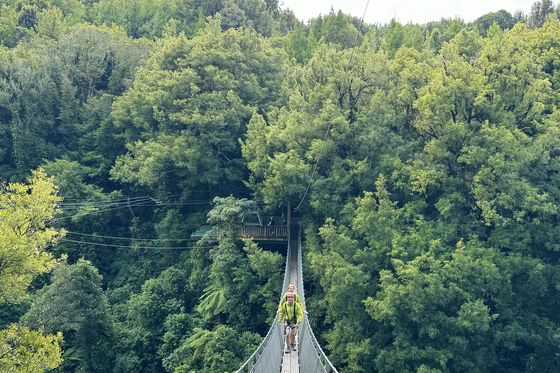
- Cross the Miyajima Suspension Bridge on the descent, its wooden deck swaying 30 feet above the forest floor.
- Enjoy a Welcome Lunch at the base of Mount Takao at a celebrated restaurant known for traditional Japanese cuisine in a beautiful mountain setting.
- Head out on your own to experience Tokyo’s endless restaurant and nightlife scene.
Japanese Alps region2 nights
Day 4: Lake Nojiri stand-up paddleboarding/kayaking and travel to the Japanese Alps
Included meals: Breakfast, Dinner
Experience Japan’s engineering marvel firsthand as the Shinkansen bullet train rockets you toward the Japanese Alps at 200 mph with such precision your coffee barely ripples. Before boarding, stop at one of Tokyo Station’s famous depachika food halls to pick up a bento box: a beautifully arranged lacquered box of seasonal rice, pickles, and local specialties to enjoy later while overlooking the shores of Lake Nojiri. Your journey reveals Japan’s remarkable diversity as Tokyo’s urban sprawl gives way to rice paddies, then forested mountains, and finally the snow-capped Japanese Alps—a towering mountain range with its distinct granite peaks. Nagano Prefecture, your destination, hosted the 1998 Winter Olympics and showcases Japan’s commitment to preserving pristine mountain wilderness alongside modern development. Here, Lake Nojiri sits like a mirror reflecting the peaks within Myoko-Togakushi Renzan National Park—the perfect setting for stand-up paddleboarding or kayaking. Once you find your balance—which happens quicker than you’d expect—you’ll paddle out into the lake’s center where the surrounding peaks create a natural amphitheater. The water is so clear and clean you can see straight to the bottom. It’s the kind of setting that transforms a simple paddle into something approaching meditation.
Lake Nojiri stand-up paddleboarding/kayaking
- Duration: 2 hours
Note: Kayaking is offered in May and June, when Lake Nojiri’s water is too cold for stand-up paddleboarding. Stand-up paddleboarding is offered all other months.
- Pick up a bento box at Tokyo Station’s depachika food hall before boarding the Shinkansen for the Japanese Alps.
- Glide across Lake Nojiri on a stand-up paddleboard or kayak, surrounded by snow-capped mountains and crisp alpine air.
- Travel to your new hotel in the Japanese Alps region (~1 hour by bus) and enjoy dinner with your group.
Note: Due to space restrictions, checked luggage cannot be brought aboard your train today. Your larger luggage will be shipped to your Japanese Alps hotel and will not arrive until midday on Day 5. Please pack an overnight bag with clothes, toiletries, and any medications you’ll need.
Day 5: Kamikochi wilderness walk
Included meals: Breakfast, Dinner
Deep within Chubu-Sangaku National Park, the Kamikochi valley represents one of Japan's most successful environmental protection efforts. This highland sanctuary, sitting nearly 5,000 feet above sea level, is so ecologically precious that it's been protected from personal vehicle access for over three decades. Your day begins at the ethereal Taisho Ike Pond—formed by a volcanic eruption in 1915 and framed by the towering Mount Yake—before the trail winds north through marshy meadows and larch forests to reach the reflective waters of Tashiro Pond. Continuing through the valley, you'll pass the historic Kamikochi Imperial Hotel before arriving at the iconic Kappa-bashi Bridge, a popular viewpoint with panoramic views of the Hotaka mountain range—and the waiting point for those on the shorter route. Those pressing on will follow the Azusa River north to Myojin First Pond, a sacred site often shrouded in morning mist beneath forested slopes, before crossing Myojin Bridge and returning south along the opposite bank, passing the Walter Weston Memorial—a tribute to the British missionary who helped introduce mountaineering to Japan—before completing the loop. Today is designed for wellness along these pristine trails—the kind that comes from breathing alpine air, walking among towering peaks, and honoring what your body needs most, whether that's adventure, restoration, or a bit of both.
Kamikochi wilderness walk options
- Option A: 2.4 miles, 85 ft elevation gain
- Physical intensity: 1 out of 5
- Option B: 7.3 miles, 348 ft elevation gain
- Physical intensity: 3 out of 5
- Travel to Kamikochi (~1 hour 15 minutes), one of Japan’s most protected alpine valleys, and begin your walk at the ethereal Taisho Ike Pond.
- Hike from Taisho Ike Pond through marshy meadows and larch forests, finishing at the iconic Kappa-bashi Bridge with views of the Hotaka range.
- Opt to continue north to the sacred Myojin First Pond and complete the full valley loop, passing the Walter Weston Memorial on your return.
- Take advantage of free time to explore at your own pace—simply absorb the beauty of this mountain sanctuary.
- Settle in for an included dinner with your group at your Japanese Alps hotel.
Osaka1 night
Day 6: Travel by train to Osaka & evening in Dotonbori
Included meals: Breakfast, Tasting
Before leaving the Japanese Alps, you'll swing by Matsumoto Castle for a quick photo stop—one of Japan’s few remaining original castles, its striking black-and-white exterior rising above the surrounding moat. Then you're off to Matsumoto Station, where you'll witness Japan’s cultural geography shifts dramatically as your trains—with a connection in Nagoya—speed from the Japanese Alps toward Osaka. Within hours, you’ll trade mountain serenity for urban vibrancy as you enter Japan’s undisputed food capital. Osaka is the birthplace of Japanese street food culture and home to the philosophy of kuidaore, literally “eating yourself into bankruptcy.” This is where takoyaki (octopus balls) were invented, where okonomiyaki—a savory pancake loaded with cabbage, meat, and seafood—reached perfection, and where food is a way of life. As evening falls, you’ll explore the neon-bright chaos of Dotonbori district on foot, experiencing towering restaurant signs, animatronic crabs, and a tasting of Osaka’s famous street food.
- Stop at Matsumoto Castle for a photo before traveling by train via Nagoya to Osaka (~3.5 hours total).
- Experience Osaka’s legendary street food scene during an evening tour through the neon-lit Dotonbori district with your Tour Director and group.
- Immerse yourself in the sensory spectacle of Dotonbori, where towering restaurant signs and the famous Glico Running Man (an iconic neon billboard) showcase Japan’s love for bold, playful design.
Note: Due to space restrictions, checked luggage cannot be brought aboard your trains today. Your larger luggage will be shipped to your Osaka hotel, and will be waiting for you when you arrive later this evening. Please pack a day bag with clothes, toiletries, and any medications you’ll need for the day.
Iya Valley region2 nights
Day 7: Travel to the Iya Valley region and Konpira Shrine hike
Included meals: Breakfast, Dinner
Today’s journey from Osaka takes you to Shikoku, Japan’s smallest main island. This is the Japan many tourists never see—a land of dramatic gorges, sacred pilgrimage routes, and traditions preserved in mountain valleys. Your first stop is the Uzu no Oka Onaruto Bridge Memorial Museum—a quirky, onion-themed cultural center perched above the Naruto Strait, where you’ll learn about the region’s famous tidal whirlpools and the local obsession with Naruto’s prized sweet onions. Then you’ll embark on one of Japan’s revered pilgrimages: the 1,368-step climb to Konpira Shrine, a sacred site that has protected seafarers and travelers for over a thousand years. Your pilgrimage begins in the town of Kotohira, where stone-paved paths wind through souvenir shops, teahouses, and local eateries before the ascent begins in earnest. The journey up 1,368 steps passes through historic gates, ancient lanterns, and temple buildings designated as national cultural properties. 785 steps in, you’ll reach the main shrine dedicated to safe passage and protection. Those who continue to the summit complete the full pilgrimage, reaching the scarlet-painted inner shrine with panoramic views of the Sanuki Plain below. Your day concludes in the remote Iya Valley, one of Japan’s most secluded regions. Here, you’ll experience authentic ryokan hospitality—sleeping on traditional tatami mats and savoring a multi-course kaiseki dinner, a refined dining experience where seasonal ingredients are artfully prepared and beautifully presented across multiple small courses.
Konpira Shrine hike
- Physical intensity: 3 out of 5
- Distance: 2.7 miles
- Elevation change: 1,148 ft gain
- Depart Osaka on a 2-hour bus to the Uzu no Oka Onaruto Bridge Memorial Museum, then continue to Konpira Shrine in Kotohira (~1 additional hour).
- Conquer 1,368 ancient stone steps to reach the sacred Konpira Shrine, one of Japan’s most revered pilgrimage sites.
- Experience authentic ryokan hospitality at your traditional Iya Valley mountain inn, complete with tatami mat rooms and yukata robes.
- Savor a multi-course kaiseki dinner showcasing seasonal ingredients artfully prepared and beautifully presented in traditional Japanese style.
Day 8: Whitewater rafting in Oboke Gorge & Kazurabashi vine bridge crossing
Included meals: Breakfast, Dinner
Beyond its stunning scenery, the Iya Valley holds deep historical significance as the final refuge of the defeated Heike warriors in the 12th century. Fleeing the victorious Genji forces after the Genpei War, these ancient warriors sought sanctuary in this rugged landscape for strategic reasons: towering gorges carved by rushing rivers provided natural fortifications, while ingenious vine bridges could be cut at a moment’s notice to halt pursuit. The steep terrain also made ambushes nearly impossible and allowed small groups to defend against larger forces. Today you’ll experience the valley’s wild side firsthand with a whitewater rafting adventure through Oboke Gorge, where the Yoshino River has carved dramatic cliffs over millions of years. The action starts quickly—you’ll experience Class II and III rapids that provide plenty of excitement as your raft weaves and bounces down the river. The Yoshino River runs crystal clear from mountain snowmelt, moving fast through the narrow gorge between towering cliff walls. Between rapids, you’ll have time to catch your breath and take in the incredible scenery: moss-covered rock faces, dense forest canopies, and the occasional bird of prey circling overhead. The afternoon brings a different kind of adventure: crossing the legendary Kazurabashi Bridge, woven from mountain vines. You’ll finish the day with a new appreciation for both the valley’s wild beauty and remarkable history.
Whitewater rafting in Oboke Gorge
- Duration: 3 hours
- Raft through some of Japan’s most exciting whitewater surrounded by the cliffs of Oboke Gorge.
- Walk across the historic Kazurabashi Bridge, a 148-foot bridge originally made of mountain vines (now reinforced with steel cables for safety) that spans high above the rushing Iya River.
- Unwind at your ryokan-style hotel with the option to book the private onsen (a traditional Japanese hot spring bath), then share stories over dinner with your group.
Seto Inland Sea region2 nights
Day 9: Morning yoga, travel to Seto Inland Sea region, Dogo tour & onsen visit
Included meals: Breakfast, Tasting
Begin your day with a rejuvenating yoga session that perfectly embodies Japan’s philosophy of finding balance through mindful movement. Then it’s time to leave the rugged Iya Valley behind and head toward the Seto Inland Sea region, often called Japan’s “inland Mediterranean” for its countless scattered islands and mild maritime climate. You’ll arrive in Dogo for a walking tour, sampling fresh-squeezed orange juice from Ehime Prefecture’s renowned citrus groves before visiting the legendary Dogo Onsen Honkan. This three-story wooden bathhouse has welcomed bathers to its natural hot springs for over 3,000 years—thermal mineral waters celebrated for their therapeutic properties and silky texture that have soothed everyone from emperors to literary figures. The ornate Meiji-era architecture served as inspiration for the magical bathhouse in Studio Ghibli's Spirited Away. After experiencing this historic hot spring, you’ll continue to your hotel in the Seto Inland Sea region, where you’ll want to rest up for tomorrow's e-biking adventure across the Shimanami Kaido—one of the world’s most spectacular island-hopping bike routes.
- Start your day with a peaceful yoga session that prepares both body and mind for the day ahead.
- Sample fresh orange juice in Ehime Prefecture, renowned throughout Japan for producing the country’s best citrus fruits.
- Experience Dogo Onsen Honkan, Japan’s oldest hot spring bathhouse. (Note: Many traditional onsens prohibit tattoos, but Dogo Onsen Honkan welcomes all travelers. For more details about onsen customs, see the Know Before You Go section below.)
- Settle into your new hotel in the Seto Inland Sea region and get some sleep before tomorrow’s cycling adventure across the world-famous Shimanami Kaido route.
Day 10: Shimanami Kaido e-biking
Included meals: Breakfast, Dinner
Few cycling routes on earth earn the word "legendary" as honestly as the Shimanami Kaido—a 44-mile corridor of dedicated cycling paths that threads six islands across the Seto Inland Sea via a series of suspension bridges. Your day begins in Onomichi, where narrow temple-lined alleys give way to the open rhythm of the sea, and the first bridge—Shin-Onomichi—lifts you above the glittering water. Each island is its own chapter: Mukaishima greets you with quiet fishing villages and citrus groves, while Innoshima offers a gentle climb past the ruins of Innoshima Suigun Castle perched above the coast. The route then continues to Ikuchi Island, where lemon orchards and the vivid Kojo Temple await—and where those on the shorter route will finish their ride, with time to visit the Hirayama Ikuo Museum of Art or browse Shiomachi Shopping Street before the bus picks them up. Those continuing on the longer route press on to Omishima, the largest island on the route and home to the ancient Oyamazumi Shrine—one of Japan's most revered maritime sanctuaries—before reaching Hakatajima, a quieter island where mandarin orchards cascade down to the shore and the pace of island life feels genuinely unhurried. Your adventure concludes with a scenic bus ride back toward your hotel, offering island views across the water all the way home.
Shimanami Kaido E-bike ride:
- Option A: 18.8 miles, 581 ft elevation gain
- Physical intensity: 1 out of 5
- Option B: 30.5 miles, 1,260 ft elevation gain
- Physical intensity: 3 out of 5
- Travel to Onomichi (~2 hours) to begin your island-hopping cycling adventure across the Seto Inland Sea.
- E-bike across suspension bridges connecting Mukaishima and Innoshima islands before continuing to Ikuchi Island, where Kojo Temple marks the finish line for the shorter route.
- Opt for the longer route and push on to Omishima Island to visit the ancient Oyamazumi Shrine, then finish on the quieter shores of Hakatajima.
- Take the bus back to Imabari and your hotel (~1 hour 15 minutes), soaking in the views of the Seto Inland Sea along the way.
- Celebrate your cycling achievement with a group dinner at your hotel.
Kyoto1 night
Day 11: Visit Himeji Castle & Gardens and travel to Kyoto
Included meals: Breakfast, Farewell dinner
Today marks the final stretch of your Japanese adventure as you journey toward Kyoto, Japan’s ancient imperial capital. But first, you’ll make an unforgettable stop at Himeji Castle, a UNESCO World Heritage site that stands as one of Japan’s most magnificent original castles. Rising from the Hyogo countryside, this 17th-century masterpiece has never fallen to war, earthquake, or fire. After exploring this architectural wonder and its surrounding gardens, you’ll continue to Kyoto for your Farewell Dinner, where your group will celebrate the incredible memories you’ve created together across Japan’s wildly diverse landscapes.
- Travel from the Seto Inland Sea to Himeji Castle (~4 hours), one of Japan’s most impressive castles
- Marvel at Himeji Castle’s pristine white walls and elegant rooflines, unchanged since the early 1600s when samurai walked these same wooden corridors.
- Walk through the castle’s ingenious defensive maze of gates and baileys, designed to confuse invaders, then explore the peaceful West Bailey.
- Arrive in Kyoto and toast to the new friendships you’ve made during a Farewell Dinner with your fellow adventurers.
Flight home
Day 12: Fly home
Included meal: Breakfast (excluding early morning departures)
Your extraordinary journey through Japan comes to an end today, but the memories you’ve made—from whitewater rapids to mountain shrines—will last a lifetime. Gather your belongings and transfer from your Kyoto hotel to one of the two Osaka airports (approximately 1–1.5 hours) for your international flight home.
Kyoto extension
Not ready to leave Japan just yet? Extend your adventure with two additional nights in Kyoto, where ancient temples, imperial gardens, and traditional arts await your deeper exploration. This extension gives you the chance to slow down and absorb Japan’s cultural heart while your body recovers from the adrenaline-filled days you’ve just experienced. From the golden reflection of Kinkaku-ji Temple to the thousands of vermillion torii gates at Fushimi Inari, Kyoto reveals layers of beauty that you have to see to believe. Plus, there’s no better place to savor one final bowl of authentic ramen or shop for handcrafted souvenirs than in this UNESCO World Heritage city.
Kyoto2 nights
Day 12: Walking tour of Kyoto
Included meal: Breakfast
Dive deeper into Kyoto’s cultural treasures, exploring both its natural wonders and architectural masterpieces. Begin your exploration in the Arashiyama district, where Japan’s famous bamboo forest forms towering natural corridors bathed in soft green light. The nearby Tenryu-ji Temple, with its classical gardens, represents the pinnacle of Kyoto’s legendary landscape design. After crossing the historic Togetsukyo Bridge, you’ll head to Kinkaku-ji, the Golden Pavilion. This three-story temple, covered entirely in gold leaf, sits beside a reflecting pond and remains Japan’s most photographed landmark—its appearance shifting with the light throughout the day.
- Walk through the spiritual Arashiyama Bamboo Forest, considered sacred in Japanese culture and the source of bamboo used for traditional tea ceremony utensils.
- Wander through Tenryu-ji Temple’s meditation halls and admire the ancient artwork that has survived wars and natural disasters.
- Cross the historic Togetsukyo Bridge, which has witnessed imperial processions and seasonal festivals for over 400 years.
- Marvel at Kinkaku-ji’s gold-covered pavilion reflecting in its tranquil pond.
- Spend the evening exploring Kyoto at your own pace.
Day 13: Fushimi Inari walking tour & tea ceremony
Included meals: Breakfast, Tasting
Your final day in Kyoto begins at Fushimi Inari Shrine, where thousands of vermillion torii gates wind up the sacred mountain in tunnel-like pathways. Your Tour Director will guide you through the lower gates and into the quieter upper reaches of the mountain, where the crowds thin and the forest closes in around you. The afternoon brings a traditional Japanese tea ceremony: a ritual introduction to the meditative art of preparing and sharing matcha, accompanied by wagashi (traditional Japanese sweets) that balance the tea’s gentle bitterness.
- Walk through thousands of vermillion torii gates at Fushimi Inari Shrine on a walking tour of one of Japan’s most iconic Shinto sites.
- Participate in a traditional Japanese tea ceremony, learning the meditative ritual of preparing matcha and savoring wagashi sweets alongside your group.
- Raise a glass during a Farewell Drink with your fellow travelers before you go your separate ways.
Flight home
Day 14: Fly home
Included meal: Breakfast (excluding early morning departures)
After two extra days exploring Kyoto’s temples and traditions, it’s time to say goodbye to Japan. Transfer from your hotel to one of the two Osaka airports (approximately 1–1.5 hours) for your international flight home.
Reviews
Handpicked accommodations
From boutique hotels to 5-star luxury retreats, our accommodations are curated with the expert eye and attention to detail that come from 60 years of travel experience, always prioritizing authenticity. We select high-quality properties that balance comfort, location, sustainability, and local charm. From bustling city centers to serene countryside and picturesque small towns, each hotel is chosen to complement your adventure’s unique style. While the specific accommodations may vary based on your travel dates, you can always count on staying at fantastic properties that meet our standards for quality and character.

Tokyo – Hotel Niwa Tokyo
See details)
Japanese Alps region — Hotel Shoho Matsumoto
See details
Osaka - Citadines Namba Osaka
See details
Iya Valley region - Hotel Kazurabashi
See details
Seto Inland Sea region - Hotel Tsubakikan
See details
Kyoto - The Hotel Higashiyama
See detailsFlights
Round-trip flights are one more thing we handle to make your journey as smooth as possible. Our team of travel experts will find the best flight itinerary for you at a competitive rate, thanks to our partnerships with top airlines.
Add our airfare and you’ll get:
- Round-trip flight for your tour
- Airport transfers at your destination
- A great price locked in today
- 24/7 support from our dedicated service team
- Options for requesting an upgrade
- Flexible rebooking options if your tour itinerary changes
Find out more about flights
Weather
Tokyo, Japan
Weather averages
Osaka, Japan
Weather averages
Nagano, Japan
Weather averages
Himeji, Japan
Weather averages
Nagoya, Japan
Weather averages
Kyoto, Japan
Weather averages
Know before you go
- In order to enter Japan, U.S. and Canadian citizens need a valid passport with an expiration date extending at least six months beyond the date of reentry.
- We recommend having at least two blank passport pages for entry stamps.
- We recommend you register your passport, flight, and other travel information at least 72 hours prior to departure through Visit Japan Web to speed up the immigration and customs process upon arrival. Once you’ve completed your information, you will receive a QR code to present upon arrival.
- If you are not a U.S. or Canadian citizen, you must contact each country’s consulate for your specific entry requirements.
- Round-trip flights booked through EF Adventures arrive in Tokyo and depart from Osaka.
- Transfers to and from the airport at the beginning and end of the tour are included for travelers who purchased their flights through EF Adventures. If you book your own flights, airport transfers may be available for a fee upon request.
- When you arrive in Tokyo, an EF Adventures representative will be waiting for you in the arrivals hall with an EF Adventures sign or a sign with your name(s). If you don’t see a representative immediately, please be patient and stay in the arrivals area. They may be assisting another traveler who has also just arrived and will be back shortly.
Physical activity level
This tour is rated at Moderate, which means you’re eager to expand your adventure horizons while still having time to appreciate your surroundings. You’re comfortable with some physical activity and ready to try new experiences at a balanced pace. You’ll enjoy a mix of relaxation and light challenges in beautiful settings.
This tour is great for:
- Recreational adventurers
- Those who enjoy a good workout in nature
What to expect:
- Up to 8-mile hikes with a maximum elevation gain of 1,450 ft on varied terrain
- Up to 31-mile bike rides with a maximum elevation gain of 1,300 ft on paved roads and paths
- Other activities such as yoga and stand-up paddleboarding in sheltered waters
Tour pacing
This is a very fast-paced tour. The pace of a tour itinerary considers how often you’ll switch hotels, the amount of planned daily activities, and how you’ll get from place to place. You can expect:
- Four 2-night stays and two 1-night stays
- Most days and evenings full of included activities
- Most transportation by bus and high-speed train
- Daily bus time varies and can be lengthy
Climate considerations
- Tokyo, Osaka, and Kyoto experience hot, humid summers (mid-70s to mid-90s°F) from June through September, with milder conditions in May and October.
- The Japanese Alps region around Nagano has cooler mountain temperatures and can be 10-15 degrees cooler than the cities.
- The Iya Valley and Seto Inland Sea regions have mild, subtropical climates with warm, humid conditions (70s-80s°F).
- Rain is possible throughout the year, especially during the rainy season (mid-June to mid-July), so pack waterproof gear.
- Pack layers to accommodate temperature variations between mountain and coastal regions.
Physical activity & tour pace questions
- EF Adventures and the Tour Director who accompanies your group are unable to provide special mobility or luggage handling assistance to travelers on tour. The responsibility of the Tour Director is to ensure the group enjoys a smooth and informative journey, and they can’t be relied on to provide individualized assistance to any one traveler.
- This tour moves at a reasonable pace to avoid missing scheduled stops. The rest of the group cannot miss any scheduled activities because of the needs of an individual.
- If you have physical activity concerns or tour pace questions, please visit our Help Center or give us call at 617-619-1679. We’re here to help!
- This tour includes various modes of transportation, including high-speed trains and private buses.
- Train ride from Tokyo to Nagano is included.
- Train rides from Matsumoto to Nagoya and from Nagoya to Osaka are included.
- Japanese train stations typically operate similarly to airports where security measures, such as baggage and body scanners, are common. Platforms are often spread out across large distances and require travelers to manage their luggage on escalators or stairs. Luggage storage on trains is extremely limited. Please keep in mind that trains may only be stopping at the stations for a few minutes; speed with loading and unloading may be imperative.
Equipment for all adventure activities will be included
- Stand-up paddleboarding: Single and double SUP boards, paddles, and life jackets
- Kayaking (May-June substitute for stand-up paddleboarding): Kayaks, paddles, and life jackets
- Whitewater rafting: Rafts, paddles, life jackets, and helmets
- Yoga: Yoga mats and any necessary props
- E-biking: High-quality e-bikes and helmets suitable for the Shimanami Kaido cycling route
- Please note that our travelers are limited to one checked bag and one carry-on bag per person due to storage limitations on buses and trains.
- Some airlines may impose additional charges if you exceed baggage size and weight restrictions. Be advised that you’re responsible for any baggage fees incurred.
- Contact your airline(s) for the baggage size and weight restrictions on your flights.
- Make sure you label your baggage and keep valuables, medication, and documents in your carry-on bag.
- Travelers must be able to manage their luggage throughout tour; porters aren’t guaranteed at hotels and airports.
- Luggage storage on trains is extremely limited, and only hand luggage is allowed. Larger luggage will be shipped to each hotel and typically arrives 1–2 days later, so a smaller bag with some essentials is recommended.
We recommend packing lightweight, loose-fitting clothing that can be easily layered to accommodate varying temperatures, as well as a light jacket or rainwear. Pack at least one set of adventure-ready clothing (athletic wear, hiking shoes, etc.) in your carry-on in case of checked luggage delays. Don’t forget to pack:
- Comfortable hiking shoes or trail runners with good traction for forest trails and stone steps
- Lightweight, long-sleeved shirts and pants for sun and insect protection
- Modest clothing for temple visits, as covering shoulders and legs is required (entrance may be denied otherwise)
- Sunscreen
- A sun hat, sunglasses, and rain gear, as these will help you stay comfortable in all types of weather
- Moisture-wicking, quick-drying hiking socks (wool or synthetic)
- A warm mid-layer (fleece or wool)
- A warm, lightweight jacket
- Insect repellent for outdoor activities
- A small overnight bag or large daypack to carry 1-2 days’ worth of clothes and essentials during portions of the tour where you’ll be away from your main luggage
- A refillable water bottle to stay hydrated throughout the tour (and cut down on single use plastic waste)
- A swimsuit and swim shirt or rash guard for water activities and hotel pools/spas
- Binoculars, in case you want to get a closer look at local wildlife and scenery
- A collapsible walking stick for long hikes (some travelers find them useful)
- Casual clothes for evenings and travel days
- Dressier attire for Welcome/Farewell Dinners and in case you plan to visit a high-end restaurant or attend a special performance
- Sleepwear and toiletries
- Any personal medications, including motion sickness remedies for bus rides
- Your medical insurance card, in case of emergencies (pack this in your carry-on)
- A universal adapter for Japanese outlets (Type A plug). Most modern electronics work with Japan’s 100V power, but three-prong devices may need an adapter since many Japanese outlets only have two slots.
- EF Adventures handpicks every hotel you’ll stay at, striking a balance between comfort, location, sustainability and local charm.
- Specific properties may vary based on your departure date, but are typically three-to-five-star hotels; always include private bathrooms; and usually have in-room safes for valuables. Additionally, your hotels will have Wi-Fi, but access may be limited to common areas.
- Unfortunately, we can’t guarantee that your accommodations will have laundry services or facilities. We recommend checking directly with your hotels once they’ve been confirmed, about 30 days prior to departure.
- Some hotels on this tour are situated in remote locations where you’ll have need to handle your own luggage.
- Please be advised that the air conditioning in Asian hotels and buildings is often not as strong or cool as what you might be used to in the U.S. or Canada.
- Japan operates on 100 volts and uses Type A and Type B plugs (same as North America). Most modern electronics will work without a voltage converter, but some appliances may require one if they don't support 100V. You’ll also need an adapter if you have three-prong devices, since many Japanese outlets only have two slots.
- Onsens, or hot spring baths, are a huge part of the Japanese lifestyle. With more than 3,600 hot springs across the country, locals and visitors alike make visiting an onsen a priority. Guests should be aware of onsen etiquette before visiting.
- Guests will undress and leave their belongings in the locker room before entering the bathing room. Some onsens are starting to offer policies for the more modest guest, but they are still not common.
- Guests must wash and rinse themselves completely before entering a shared bath. Be mindful while washing yourself so as not to spray others in the bathing room.
- A small white bathing towel will sometimes be provided or available to rent, and is used as a cover-up, to wash your body, and dry yourself. Shampoo and soap are commonly provided, but many guests bring their own.
- Keep your bathing towel with you at all times. Most guests fold the towel and keep it near them while in the baths, or keep it folded up on top of their heads. The bathing towel must never touch the bath water.
- Hair should be worn up and should not touch your towel or the water.
- Onsens are a relaxing and tranquil experience, be sure to speak quietly and be respectful of others who are relaxing. There is no swimming, diving, or running in the baths.
- You may soak, exit, and reenter the baths at your leisure. It is recommended you don't spend more than 30 minutes in the baths.
- Dry off completely before entering the locker room to change back into your clothes.
- Be sure to check an onsen’s tattoo policy before visiting. While many onsens are becoming more relaxed about tattoos, and some offer cover-up patches or private baths for those with tattoos, there are still many that do not allow guests with tattoos. While most people in Japan do not have an issue with tattoos themselves, many establishments maintain conservative business practices around tattoos.
- At least 60 days prior to departure, check with your doctor or healthcare provider for the latest updates and entry requirements, or visit the Center for Disease Control and Prevention website at cdc.gov.
- If you have dietary restrictions and/or food allergies please notify EF Adventures at least 30 days prior to your departure by logging in to your account and updating your traveler info. To update this information closer to your departure date, please contact our Customer Experience Team.
- If you have medication that you take daily, be sure you have enough for each day of the tour and any possible delays encountered.
- There are inherent risks associated with adventure activities including hiking, stand-up paddleboarding, whitewater rafting, and e-biking, particularly for those with pre-existing medical conditions. Discuss your planned activities with your doctor or healthcare provider for the best advice on participation.
- Travelers prone to motion sickness should note that this tour includes several winding bus routes.
- This tour includes one lunch and six dinners. They may be set menus, à la carte, buffets, or family-style meals, depending on the location. Dinners also may include beer, wine, juice, soft drinks, as well as water, coffee, and tea.
- Breakfast each morning is included at the hotel and varies from Western-style buffets to traditional Japanese breakfast.
- Japanese cuisine varies greatly by region. In Tokyo, you’ll experience urban food culture including street food. In the Japanese Alps, try mountain specialties like soba noodles. In Osaka, sample the city’s famous street food including takoyaki (octopus balls) and okonomiyaki (savory pancakes). In rural areas, enjoy traditional kaiseki meals and local specialties.
- Most Japanese meals are based around rice or noodles with fish, meat, and vegetables flavored with soy sauce and miso. You may recognize popular dishes like sushi, tempura, and ramen.
- Travelers should expect meals to be delicately balanced in flavor—often lighter, less salty, and less sweet than Western dishes. Presentation is important, with food often served in small, beautifully arranged portions that emphasize seasonal ingredients and freshness.
- Please note that many Japanese dishes contain fish-based broths and sauces. Vegetarian and dietary restrictions can be accommodated with advance notice.
- Tips for meals, bus drivers, porterage (if applicable), and local guides for adventure activities are included in the price of your tour.
- At the conclusion of your tour, it is customary to offer your Tour Director a gratuity in local currency. Please keep current exchange rates in mind.
- We recommend tipping the equivalent of $15-$20 USD per person per day for your Tour Director.
- Tips can only be paid in cash.
- You will use the Japanese yen on this tour.
- Japan remains a very cash-forward culture, so plan to carry cash for many transactions including restaurants, shops, and transportation.
- Better rates of exchange are usually available overseas, although it’s worth ordering some currency from your local bank to use when you first arrive.
- We strongly advise that you take debit and credit cards, which can be used to withdraw cash at local banks as needed.
- You can use most cards at ATMs on the international networks Cirrus and Plus, but make sure to check with your home bank about withdrawal fees.
- International banks and businesses primarily accept debit and credit cards that work with the EMV chip system. If you don’t already have at least one card with a chip in it, we strongly recommend requesting one from your bank prior to your tour.
- Keep coins in the local currency on hand, as some public bathrooms may charge a fee for use.
- Plan ahead and bring cash to tip your Tour Director.
- To help you feel prepared before traveling on tour, we strongly recommend downloading the EF Adventures mobile app. It’s free and provides information about important deadlines and entry requirements, as well as your detailed itinerary, packing tips, and more. You can also connect with fellow travelers through the app’s chat feature.
- Wi-Fi is available in most hotels, though some charges may apply.
- There is no Wi-Fi on any of the buses. There may be Wi-Fi on trains, however it can be unreliable.
- Please contact your mobile service provider for information on roaming charges.
Your Tour Director will be an experienced guide who will be with you throughout the entire journey. In addition to sharing their knowledge of the country's history, culture, and natural wonders, they will coordinate all included activities, assist with logistics, and ensure a smooth and enjoyable experience for the group.
The Tour Director will work closely with local guides who specialize in each adventure activity, providing an additional layer of expertise and support. As an active individual themselves, your Tour Director will participate in many of the same adventure activities as you and is trained in safety procedures to ensure the well-being of the group.
- One of the benefits of traveling with EF Adventures is our on tour emergency support team.
- Our extensive network of offices around the world, and our integration of ISO 31000: Risk Management Guidelines, help our dedicated 24/7 Emergency Service teams anticipate and address on-tour challenges in a flexible and iterative way.
- This team supports travelers and Tour Directors using a combination of extensive training, simulations, incident response planning, and decades of experience to help manage emergencies if they arise, ranging from personal health concerns or injuries to major world events.
- As needed, On Tour Support can facilitate additional support for travelers on tour, arrange assistance from outside specialists, and liaise with local and international authorities to help solve on-the-ground issues. In addition, the team is dedicated to supporting and facilitating communication between travelers and families in the event of an emergency while on the road or at home.
- Japan Standard Time is 9 hours ahead of Greenwich Mean Time (GMT) and 14 hours ahead of Eastern Time.
- Japan does not observe daylight saving time, which means the time difference with the U.S. changes by one hour during daylight saving periods.
- When it’s noon in New York, it’s 2am the next day in Japan (during standard time) or 1am the next day (during daylight saving time).
- When you travel with EF Adventures, you’ll make a positive impact on the places you visit and the people and animals you meet along the way. That’s because our three core Responsible Travel commitments—protecting the environment, supporting local communities, and promoting animal welfare—are at the heart of every tour we offer.
- Travel, when done responsibly, can have an enormous socioeconomic impact on communities. To maximize your impact, eat at locally owned restaurants and shop at small businesses. Ask your Tour Director to point out restaurants they recommend.
- Prepare for your trip: Be aware of monetary norms such as tipping and negotiating in a market; learn about the destination’s forms of etiquette; and take some time to learn a few words in the local language.
- When interacting with locals, make sure to ask people for permission before you take their picture, and approach cultural differences with empathy and an open mind.
- EF Adventures encourages travelers to limit their waste while on the road, especially single-use plastics. You can cut back on generating plastic waste by packing your own toiletries, using electronic documents, and bringing a reusable water bottle and shopping bag. If you need to use plastics or paper, please recycle.
- Be prepared to carry your trash with you, as public waste bins are rare in Japan. This practice stems from Japanese cultural values of personal responsibility and cleanliness. Plan to dispose of waste at your hotel or designated areas, and always separate recyclables when bins are available.
- When visiting national parks, reserves, or other protected areas, please do not remove anything from the natural environment or leave any litter. Carry out what you carried in.
- When you come across wild animals on tour, take the philosophies of World Animal Protection to heart: Don’t touch or feed them, and maintain a respectful distance. The animals you encounter on your trip should be able to exhibit natural forms of behavior.
- Furthermore, avoid buying exploitative animal products, like crafts made from animal parts or products tested on animals.
- Read about Japan's efforts to promote sustainable tourism and proper travel etiquette during your stay here.
- If you feel we aren’t meeting any of these commitments, please let us know.
Flights? We got you.
Round-trip flights are one more thing we can handle to make your journey as smooth as possible. Our team of travel experts will find the best flight itinerary for you at a competitive rate. Rates shown in cart.




)


)
